Case Study: Autonomous vs. Human-in-the-Loop Development
"And God said, Let us make man in our image, after our likeness." — Genesis 1:26
Introduction
Large language models excel at speed and scale, yet they remain square pegs in the round hole of reality—fast and precise, but devoid of intuition, foresight, and lived experience. Humans, by contrast, learn through collaboration, reflection, and feedback from the world. We align technology with strategy, adapt to uncertainty, and build systems that carry intent and meaning.
The Genesis creation story reveals two modes of making. Everything else was spoken into existence, but humanity was shaped “in the image of the Maker”—consciousness formed through reflection, not command. That distinction between creation by word and creation by likeness captures the essence of the human role in the age of artificial intelligence.
Autonomous coding agents like Windsurf can now refactor and optimize entire codebases in minutes—work that once took teams weeks. Yet speed alone is not progress. Code that compiles is not the same as code that endures. Creation still demands judgment, context, and a guiding mind. The machine can execute; only the human can create.
Syntext Case Study
At Syntext, an AI-powered platform that transforms documents into interactive learning assets, we put this idea to the test. Windsurf was given full access to our codebase with instructions to improve performance and structure. Within minutes, it generated over a thousand lines of code, refactoring repositories, handlers, and database layers.
The result was the branch autonomousaiagentwip, a dense web of code riddled with broken method signatures, disrupted data flow, and ignored architectural constraints. We could not even sign in to the app. The lesson was clear: machines can generate structure, but only humans can generate sense.
Nine Lessons from Human-in-the-Loop Recovery
Documenting the recovery process, informs current Human-in-the-Loop (HITL) principles, and might serve as essential insights for building sustainable AI-driven development workflows.
1. Productivity Gains Require Human Validation
AI accelerates boilerplate generation, syntax fixes, and migrations. However, most of the generated code was unusable, introducing redundant features and errors. Human review transformed raw output into meaningful progress.
Takeaway: AI amplifies effort but lacks strategic intent. Productivity scales only when humans filter, validate, and refine outputs.
2. Context Requires Human Intent
AI generates syntactically correct code but cannot prioritize. Windsurf pursued six uncoordinated improvements, rewriting authentication logic and UI components, ignoring Syntext’s roadmap and product goals.
Takeaway: AI generates code; humans define purpose. Strategic vision cannot be outsourced.
3. Proactive Oversight Prevents Issues
AI is reactive. It created multiple database pools in dbutils.py and app.py, risking connection exhaustion in production. Human reviewers consolidated logic into one RepositoryManager.
Takeaway: AI fixes problems; humans prevent them.
4. Prompt Engineering Drives Precision
Vague prompts like “fix this code” produced garbage. Precise prompts, “migrate this function to async, preserve return types, avoid logic changes”, produced actionable code.
Takeaway: Developers must translate intent into machine precision. Prompt engineering is the new literacy.
5. Human Judgment Ensures Simplicity
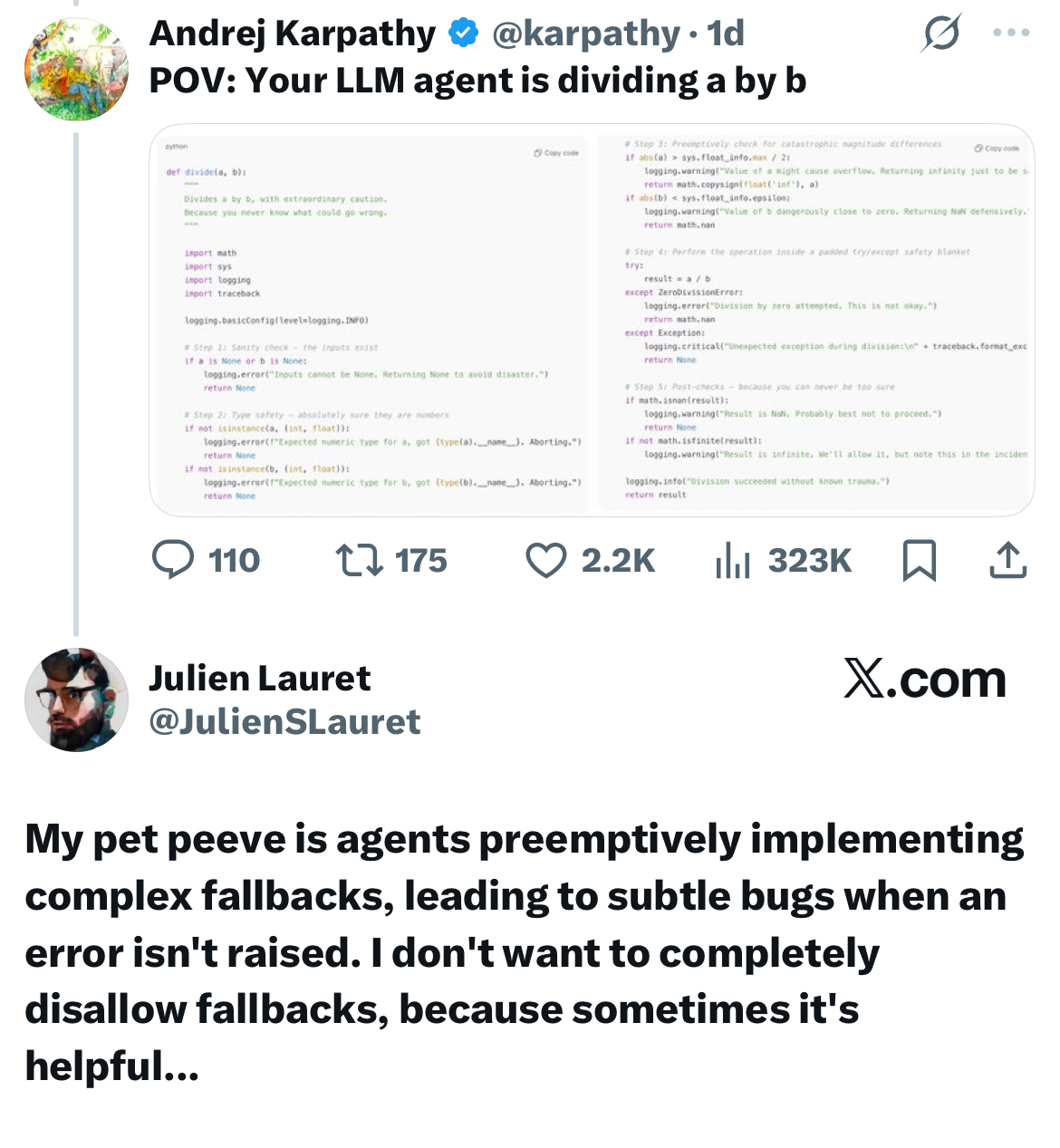
AI over-engineered the codebase, adding redundant validation and middleware. Preemptively implementing complex fallbacks introduces subtle bugs when an error isn't raised. Humans streamline architecture, reduce complexity, and maintenance costs naturally.
Takeaway: AI writes code that works; humans ensure it lasts.
6. Oversight Preserves Ownership
Unchecked automation detached developers from critical modules. LLMs still drift, goal-seek, and might skip the hard part. Human oversight is real critical for reliable engineering. Architecture / Clear Docs, readable code, solid tests and results that we can repeat. Automation only done with transparent processes. Maybe there is a silver lining, reviewing code like this takes more time than reviewing human-written code so companies might still need to hire engineers.
Takeaway: Developers must understand, explain, or undo AI-generated code to maintain ownership.
7. Discipline Enables Scalable HITL
Human oversight is structured discipline. By standardizing prompts, defining review checkpoints, and modularizing tasks, we scaled AI-assisted development without sacrificing quality. Controlled phases of refactoring reduced risk and improved delivery.
Takeaway: Process discipline drives scalable, reliable HITL.
8. Incremental Change Prevents Failure
The autonomousaiagentwip branch collapsed because it attempted multiple changes simultaneously: database migrations, repositories, routes, DSPy integration, and RAG pipelines. Human-led recovery emphasized small, testable changes with continuous validation.
Takeaway: Refactor incrementally, one component at a time.
9. Human Judgment Guides Future AI
Even advanced agents will ask better questions, “Should I prioritize speed, memory, or clarity?”, but their success depends on human guidance. During recovery, human input ensured optimizations aligned with user needs, maintainability, and strategic goals.
Takeaway: AI requires steering to remain aligned and reliable.
Key Principles for AI-Driven Development
- Productivity Boost: Validate AI outputs to ensure meaningful progress.
- Context Awareness: Humans define intent and priorities.
- Code Review: Prevent architectural drift with proactive oversight.
- Prompt Engineering: Translate goals into precise AI instructions.
- Complexity Management: Prioritize simplicity for long-term maintainability.
- Oversight: Maintain ownership through transparency.
- Discipline: Standardize prompts, define review checkpoints, and modularize tasks.
- Incremental Change: Refactor one component at a time, validate continuously.
- Human Judgment: Guide AI decisions for alignment and sustainability.
Future Outlook
- Self-diagnostic AI agents may flag conflicts or errors before execution.
- Integration with CI/CD pipelines and linters could formalize HITL.
- HITL frameworks will likely become standard in enterprise AI-assisted development, balancing automation with human oversight.
- Only commit code to repo after critical path tests pass
Risk and Ethical Considerations
- Security: AI can inadvertently introduce vulnerabilities.
- Accountability: Teams must track AI-generated changes to assign responsibility.
- Transparency: Developers need visibility into AI decisions to maintain trust.
Conclusion
Autonomous agents like Windsurf accelerate coding but lack vision. Human-in-the-Loop development transforms speed into meaningful progress, ensuring simplicity, ownership, and alignment with product goals. Machine speed paired with human judgment is the formula for sustainable innovation.
Final Thought: HITL is not a constraint; it is a competitive advantage. As AI reshapes software development, the human touch ensures technology serves purpose, not process.
Call to Action
What’s your experience with AI in development? Are you leaning toward autonomy, human oversight, or a hybrid approach?
Let’s connect to explore how Human-in-the-Loop frameworks can transform your development process.